We draw every gift on a screen. A screen is patient: it shows a drawing at any size, in perfect light, and never smudges. Cotton, ceramic and card are more honest. So some things we order for ourselves first, from the same print house that makes yours, and a person unpacks them at home and looks at them closely. Most of what came out of the first parcels was as we'd hoped. Three things weren't, and we changed them.
Spots that looked like stains
Our birth poster is drawn like a page from an old herbarium: a little plant grown from the baby's name, pressed on cream paper. To make that paper look old, we gave it seven faint brown spots, the kind old book pages get. On a screen they looked charming. Printed on cotton, they looked like stains.
One of the first people to have the poster told us so, and the one printed for us showed the same. We took the spots out of every poster, on the screen and in print, and printed them a new one, free. The poster in our shop's photo is still that first print, spots and all. A new photo follows.
A number too small to read
Under the plant is a small label, like one in a museum, with the baby's details and a specimen number. On the screen the number read fine. On the cotton, held at arm's length, it didn't: it was just over 2 millimetres high. It's 3.4 millimetres now, the size of the date line, which reads clearly. The rest held up: the white daisies still read as flowers, the thin veins on the dark leaves kept, and the colours came out close to what the phone showed.
A date behind the stand
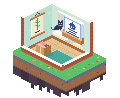
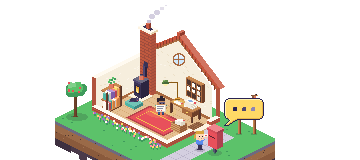
The house tile comes with a small wooden stand for the windowsill. The first tile went into its stand at home, and the stand's front edge covered the bottom of the tile, right where the date was. Now everything you type or pick, the names, the date, a line of text, stays clear above the part the stand covers, on every tile. The drawing may run behind the stand. The words don't.
Why our photos are of things we ordered
The photos in our shop are of things we ordered for ourselves. A person photographs each one at home, by a window. We don't have a photo studio, so AI touches the photo up afterwards: the light, the colours of the room, sometimes the background. The product itself stays exactly as it is, in its real colours, size and finish, and a person checks every photo against the real one before it goes up. Pinhole, one of our AI agents, does the touching up: you can meet them in Who's behind Onlyonery.
Where something carries words, like a name on a notebook's label, the photo shows them in the language you're reading in, as we'd print them for you. Where we don't have a photo yet, the picture is a drawing and says so. How we make our product photos has the whole of it.
What we don't print first
We don't order a test print of every new thing: it costs money and ends up as waste. Instead, a new thing's print files are checked at their real size before it opens, with the longest and the shortest names it takes. We print one for ourselves only when a question needs the real material to answer it, like how a colour comes out on cotton, or when the shop needs a photo of it.
If something looks wrong to you
If something arrives misprinted or damaged, you get a new one or your money back: see Misprints and refunds. And if something just looks wrong to you, like those spots, tell us anyway. Talking to us says how. It was one person's remark that changed every poster after theirs.